East Melbourne 3002 · Registered NDIS Provider

NDIS Provider East Melbourne – Disability Support Services

Personalised NDIS support in East Melbourne for home routines, personal care, health appointments, transport and community participation. MyCare4U plans support around residential streets, gardens, event traffic, mobility, communication, sensory preferences and your own goals and pace.

Illustrative disability support in Fitzroy Gardens near the Conservatory in East Melbourne
Support shaped around you East Melbourne support with the route and timing thought through.

From a home routine or library visit to a health appointment or garden outing, practical details are agreed before the shift.

24/7 support may be arranged
Worker matching discussed upfront
Culture and language preferences
Registered NDIS Provider

NDIS support services in East Melbourne

NDIS Support for Home Routines, Health Appointments and Community Life in East Melbourne

East Melbourne is the established City of Melbourne neighbourhood immediately east of the central city, with heritage streets, apartments, gardens, health services and a southern sports and entertainment precinct. The area can feel residential and calm in one street while nearby hospital arrivals, commuter traffic or major events create very different movement and sensory conditions.

Home support may take place in older terraces with steps and narrow entries, accessible or conventional apartments, retirement settings or newer buildings with secure access and lifts. Before a first home-support shift, MyCare4U can discuss the correct entrance, parking or pickup point, lift or stair access where relevant, the participant’s routines, communication and mobility requirements, and any practical information needed to arrive safely and on time.

A participant’s local routine might include East Melbourne Library, Fitzroy Gardens, shopping, a health appointment, a train or tram connection, or travel through neighbouring Richmond and the CBD. Support can be structured around personal care, meals, household routines, shopping, appointments, skill building and participant-chosen community activities. The goal is not to fill time with generic outings; it is to connect agreed assistance with something the participant wants to maintain, learn, attend or do more independently.

Heritage footpaths, driveway gradients, hospital drop-off rules, garden surfaces and event-day crowd flows need to be checked for the particular person and route. Accessibility varies by route, stop, entrance, weather, event conditions and the person’s own needs. After understanding the request, MyCare4U confirms the next steps and provides clear information about scheduling and service arrangements. NDIS-funded support depends on the participant’s plan, goals, available budget and applicable rules.

Are you a support coordinator, family member or participant planning a referral? Share the support request

Transport, appointments and community access

Plan residential pickups, appointment arrivals and event-day alternatives

East Melbourne journeys may involve quiet residential streets, busy arterial roads, hospital entrances, garden paths or sports-precinct crowds. A support plan can identify the safest practical pickup, the correct building or clinic entrance, mobility equipment, communication needs and enough time for a participant who benefits from a slower or clearly sequenced transition.

The Royal Victorian Eye and Ear Hospital’s official arrival guide identifies low-mobility drop-off at Gisborne Street or Morrison Place. A worker may support an agreed journey, wayfinding, communication and the trip home, but MyCare4U is not affiliated with the hospital and does not provide medical care. Current hospital instructions should be checked directly.

Major events around the MCG and nearby sports venues can affect road closures, tram loads, pedestrian flows, parking and noise. Even when the participant is not attending the event, these conditions may change an appointment or community-access route. A quieter alternative, different meeting landmark or additional time may be more appropriate.

A worker may help check live information, follow a written or visual journey sequence, allow extra processing or transfer time, locate a suitable rest point and support communication during an agreed trip. Public transport remains separate from MyCare4U vehicle support. Neither option should be assumed until the participant’s needs, funding, service agreement, safe pickup and return journey have been discussed.

MyCare4U transport and community access planning for participants in East Melbourne

Plan the whole journey, not only the destination

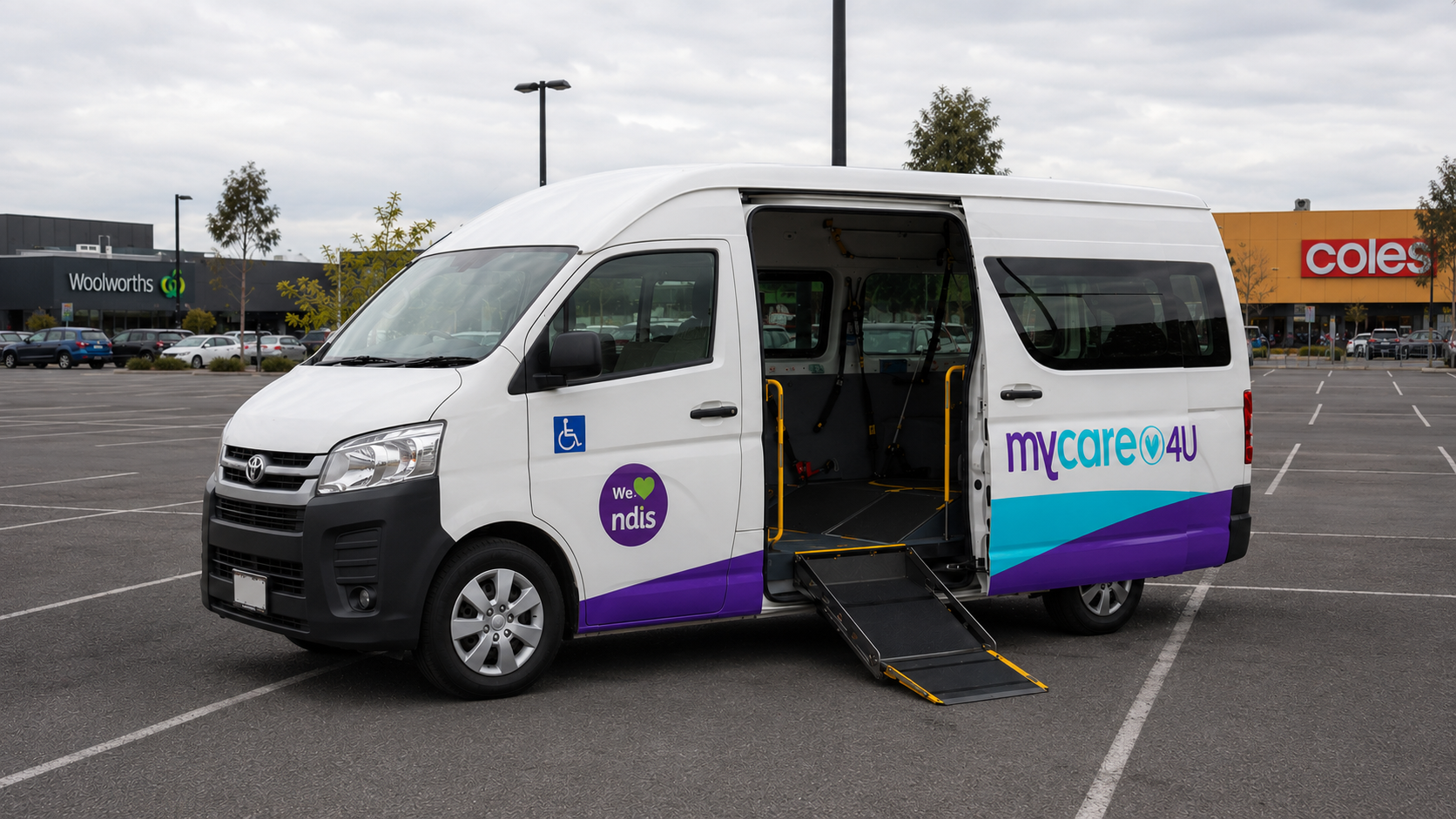
East Melbourne vehicle planning may need to distinguish a residential pickup from a hospital drop-off or event-affected street and confirm whether the participant can safely transfer at the selected point. The branded Corolla may suit some ordinary journeys, while the wheelchair-accessible Hiace may suit an eligible ramp-access trip when available. The correct vehicle, mobility equipment, safe loading and approved support are confirmed before travel.

MyCare4U wheelchair-accessible Hiace with ramp for disability transport support

Wheelchair-accessible vehicle option

The MyCare4U Hiace has a ramp and accessible layout for suitable wheelchair journeys when it is available. Mobility needs, safe loading, destination access, approved supports and the service agreement are confirmed before travel.

  • Actual home or appointment entrance
  • Low-mobility drop-off and return pickup
  • Garden distance, surfaces and rest opportunities
  • Sports-precinct event and road conditions

Disability supports in East Melbourne

Practical support for everyday life

Services are planned around the participant’s NDIS goals, preferred routine, communication, home environment and approved supports. These East Melbourne examples show how support may connect with real local life; suitability, funding, timing and worker availability still need to be confirmed.

Explore all supports

Daily Personal Care & Self-Care

Respectful assistance with showering, dressing, meals and other agreed personal routines in an East Melbourne terrace, apartment or supported living home. Arrival, privacy, communication, mobility and the time needed to complete routines safely are discussed first; support outside ordinary hours depends on the service agreement and worker availability.

Relevant NDIS support items and rates vary by the time, day and participant plan. Personal and home care →

Supported Independent Living

Individualised help to build or maintain routines for shared or individual living, including meal planning, home safety, choice, communication and participation in everyday East Melbourne life. Supported Independent Living requires separate assessment of needs, suitability and any current vacancy or accommodation arrangements.

SIL availability is subject to assessment, suitability and current vacancies. Supported home living →

Household Tasks

Practical assistance with cleaning, laundry, meal preparation, shopping lists and home organisation. A shift can reflect heritage layouts, stairs or narrow entries where present, apartment building rules and the participant’s preferred household sequence, the participant’s energy and preferred way of completing tasks instead of imposing a standard household routine.

Delivered according to your goals and approved supports. Explore home support →

Daily Living & Life Skills

Step-by-step coaching with budgeting, shopping, cooking, digital bookings, communication, time planning and practising a familiar journey such as a familiar trip between home, East Melbourne Library and a transport connection. Written, visual, demonstrated or repeated instruction can be used at the participant’s chosen pace.

Support is adapted to your pace and preferred way of learning. Skills and independence →

Community Participation

Support to take part in chosen social, recreational and community activities in East Melbourne and surrounding areas.

You decide what meaningful participation looks like for you. Community participation →

Multicultural & Language Matching

Worker matching that considers language, culture, faith, food, family routines and preferred communication. MyCare4U asks the participant what matters and aims for a suitable match where available, without making assumptions from a surname, suburb, community or diagnosis.

We aim to provide a suitable worker match wherever available. Multicultural support workers →

Disability-aware community access planning

East Melbourne access planning for libraries, gardens and appointments

These independent public venues, spaces and transport services may help with an East Melbourne community-participation plan. Inclusion is for planning information only and does not imply a partnership or endorsement. The descriptions use official published information, but programs, opening hours, construction, access features and transport conditions can change. Check the linked source and the exact feature required before visiting.

Library and community

East Melbourne Library

East Melbourne Library at 122 George Street offers adult and children’s programs, a community garden, bookable community space, computers and Wi-Fi. The City also lists an incontinence-product disposal bin at the library. A support worker may help choose a group, use digital services, organise a quieter visit or practise a familiar walking route. Check current programs, room availability, opening hours and the specific access or personal-care feature required before visiting.

Official East Melbourne Library listing
Gardens and visitor information

Fitzroy Gardens Visitor Centre

The City’s Fitzroy Gardens Visitor Centre listing publishes information about accessible toilets, assisted listening, mobility access and service animals and provides downloadable access guides. A worker may help review the guide, choose a manageable garden route, prepare for surfaces and distances, locate rest points and adjust the visit for weather or sensory load. Confirm current facilities and the exact route; an accessible visitor centre does not guarantee that every garden path suits every participant.

Official visitor centre and access guides
Health appointment arrival

Royal Victorian Eye and Ear Hospital

The Eye and Ear Hospital at 32 Gisborne Street publishes arrival guidance including low-mobility drop-off at Gisborne Street or Morrison Place. An agreed support worker may assist with preparing appointment information, arriving at the correct entrance, wayfinding, communication and returning home. The hospital provides the clinical service and controls its access arrangements; MyCare4U has no partnership with it. Check the latest visitor, drop-off and appointment instructions directly before travel.

Official hospital arrival information
Accessible journey tools

Transport Victoria accessibility resources

Transport Victoria explains how Journey Planner can show features such as lifts, accessible toilets, hearing loops, tactile indicators, ramp-access tram stops and accessible buses. For a East Melbourne journey, a support worker may help compare the live options, choose a clear meeting point, allow enough transfer time and prepare a backup route. A low-floor vehicle does not by itself guarantee level or ramp access at the intended stop, so check the exact service and boarding point before travel.

Transport Victoria accessibility resources

Culture and communication matter

Support should feel respectful from the first conversation.
LanguageFaithCultureFoodFamily routinesCommunication

Culturally responsive disability support

Respectful support for East Melbourne routines and communication

A person’s address does not tell us their language, faith, culture, family involvement, food preferences or communication method. MyCare4U asks the participant directly about what should shape support in East Melbourne, including how information is explained, who may be involved in decisions and which personal or household routines must be respected.

Communication preferences may include plain language, visual steps, demonstrations, written reminders, extra processing time, communication devices or a consistent way to prepare for changes. Where possible, MyCare4U aims to match a worker who can respect the requested language, culture and communication approach, subject to worker skills, availability and the requirements of the support.

Matching is reviewed through the participant’s experience. Feedback about timing, pace, boundaries, communication and what makes a local journey feel manageable should inform future shifts rather than being treated as an afterthought.

Explore Culturally Matched Support

Starting support in East Melbourne

Plan the support outcome and the East Melbourne details together

Participants and families can explain the support being requested, location, preferred days and times, mobility and communication requirements, worker preferences and any home-entry or travel information needed for a safe introduction. MyCare4U then discusses service fit, current availability, the proposed worker match, pricing and the service agreement before support begins.

Support coordinators can use the referral form to share the relevant goals, support type, frequency, plan-management details, authorised contacts, communication needs and risks that affect safe delivery. Local context—such as heritage home access, a hospital drop-off, garden pacing or MCG event traffic—can be included when it changes how a shift should be scheduled or delivered. Please provide only the personal or health information necessary for the referral.

NDIS funding is individual. A visit to East Melbourne Library, travel through a named station or help with an ordinary home routine is not automatically funded merely because it appears on this page. The participant or authorised representative should consider plan goals, available funding and applicable NDIS guidance; admission, food, fares and personal purchases remain separate participant expenses unless another valid arrangement applies.

MyCare4U supports enquiries across East Melbourne Melbourne VIC 3002 Call 1800 00 10 20 Service fit, timing and worker availability are confirmed before support begins

Nearby service areas

Explore NDIS support near East Melbourne

East Melbourne adjoins Melbourne CBD, Carlton and inner-eastern neighbourhoods including Fitzroy, Collingwood and Richmond. The closest useful page depends on the participant’s actual address and journey.

Frequently asked questions

NDIS support in East Melbourne

Can a support worker accompany me to an Eye and Ear Hospital appointment?

An agreed support may include preparing for the journey, using the hospital’s published low-mobility drop-off information, reaching the correct entrance, wayfinding, communication and travelling home. MyCare4U does not provide the clinical appointment or claim a hospital partnership. Whether the support is appropriate depends on the participant’s plan, goals, funding and service agreement.

Can support include East Melbourne Library programs?

A participant-chosen library group, digital-learning activity, community-garden visit or quiet reading routine may form part of community participation where it aligns with the plan and service agreement. A worker can help check the program, register if needed, navigate the building, use technology and practise a repeatable route. Opening hours and specific facilities should be confirmed with the Library.

How can a Fitzroy Gardens visit be made more manageable?

Planning can begin with the official access guide and then consider the participant’s preferred entrance, intended distance, path surfaces, weather, seating, toilets, mobility equipment, sensory conditions and a shorter backup route. A worker may help pace the activity and communicate choices. The description should never be taken as a guarantee that every path is wheelchair accessible.

How does MyCare4U plan around MCG event-day crowds?

A shift may need a different pickup point, extra travel time, a quieter route, earlier arrival, breaks or rescheduling where appropriate and agreed. Road closures and transport conditions are controlled by authorities and event operators, so official live information should be checked. Planning is useful even when the participant is travelling through the area rather than attending the event.

Can support include hospital communication and the journey home?

Where agreed, a worker may help the participant organise questions, carry necessary non-clinical items, communicate access needs, follow directions and complete the return journey. The participant and health professionals remain responsible for clinical decisions. Any personal care during travel or at a facility must be planned safely, within the worker’s role and consistent with the service agreement.

What disability supports can MyCare4U discuss in East Melbourne?

Enquiries may cover personal and home care, household tasks, daily-living and life-skills coaching, community participation, transport assistance, Supported Independent Living and culturally responsive worker matching. The appropriate mix depends on the participant’s goals, plan, home environment, preferred schedule and current availability. The local examples on this page explain planning possibilities; they do not mean every support, activity or time is automatically funded or available.

Can MyCare4U help with transport and community access around East Melbourne?

Transport and community-access assistance may be discussed for eligible appointments, errands and participant-chosen activities. MyCare4U confirms the pickup point, destination, suitable vehicle, mobility requirements, level of assistance, timing, funding and worker availability before travel. Public-transport fares, tickets, food and personal purchases are separate from the cost of support unless an applicable arrangement says otherwise.

Can 24/7 disability support be arranged in East Melbourne?

Some personal care and other agreed supports may be scheduled at any hour, including weekends, when this is consistent with the participant’s needs, plan, funding, service agreement, safe delivery requirements and worker availability. The exact roster is confirmed before services begin. MyCare4U is not an emergency service, and the term 24/7 does not promise an immediate unscheduled response.

Can I request language, cultural or communication matching in East Melbourne?

Yes. Tell MyCare4U about language, culture, faith, food, family routines, communication devices, visual or plain-language information and other preferences relevant to respectful support. The team aims to find a suitable worker match where possible, subject to skills, service requirements and availability. The participant can give feedback and ask for the match or communication approach to be reviewed.

How do I start or make a referral for support in East Melbourne?

Use the booking form for an initial conversation or the referral form to share a defined support request. Include the service type, location, preferred schedule, goals, mobility and communication needs, worker preferences and necessary plan-management information. MyCare4U will discuss service fit, current availability, pricing, the service agreement and next steps before support starts; please provide only the personal information needed for that conversation.

Your care, your way

Let’s plan disability support around your life in East Melbourne

Tell MyCare4U about the home routine, journey, appointment, community goal or worker preferences that matter to you. We will discuss what may fit, confirm current availability and explain the proposed next steps clearly.

Useful links:

Features and tools:

Useful forms:

Get in touch: