Port Melbourne 3207 · Registered NDIS Provider

NDIS Provider Port Melbourne – Disability Support Services

Personalised NDIS support in Port Melbourne for home routines, personal care, appointments, transport and community participation. MyCare4U plans support around waterfront routes, Fishermans Bend connections, mobility, communication, sensory preferences, weather and your chosen goals and pace.

A support worker walking beside a wheelchair user in Westgate Park, Port Melbourne, beneath the West Gate Bridge
Support shaped around you Port Melbourne support from home routines to waterfront access.

Daily living, accessible travel, appointments and chosen community activities can be planned as one practical sequence.

24/7 support may be arranged
Worker matching discussed upfront
Culture and language preferences
Registered NDIS Provider

NDIS support services in Port Melbourne

Personalised NDIS Support for Daily Living and Community Participation in Port Melbourne

Port Melbourne combines established homes and apartment buildings, beaches and foreshore routes, working industrial streets, major freight corridors and the changing Fishermans Bend precinct. It is also a shared-boundary suburb. The City of Melbourne portion includes areas around Lorimer Street and the Fishermans Bend Employment Precinct, while much of the established bayside residential and retail neighbourhood is within the City of Port Phillip. A referral should always use the participant’s exact address rather than assuming that every Port Melbourne location sits in the same municipality.

Home support may begin in a detached house, townhouse or secure apartment building. MyCare4U can discuss the correct entrance, intercom or concierge process, lift access, visitor parking, safe loading area, mobility equipment, communication preferences and the participant’s chosen routine before a first shift. Personal care, meal preparation, household assistance and daily-living coaching are delivered according to the participant’s choices, privacy, support plan and service agreement—not according to assumptions about the type of home.

Community participation may involve Westgate Park, a foreshore route, local shopping, a health appointment, a library or community activity, or travel into Melbourne CBD. A useful plan connects the participant’s actual goal with the full sequence: preparing to leave home, reaching a safe pickup or public-transport stop, managing distance and conditions, completing the chosen activity and returning with enough time and energy for the rest of the day.

Port Melbourne conditions can change between quiet residential streets, exposed waterfront paths and roads affected by freight, construction or peak traffic. Weather, noise, uneven or temporary surfaces, long crossings, industrial vehicle movements and limited stopping areas may affect mobility, sensory comfort and timing. When you enquire, MyCare4U discusses your goals, preferred schedule, travel needs and support preferences before preparing a service agreement. NDIS-funded support depends on the participant’s plan, goals, available budget and applicable rules.

Are you a support coordinator, family member or participant planning a referral? Share the support request

Transport, appointments and community access

Plan Port Melbourne travel around tram access, waterfront distance and freight routes

A Port Melbourne journey can involve apartment lifts, residential streets, the Route 109 light-rail corridor, bus connections, a waterfront path or roads through Fishermans Bend. The safest plan starts with the exact address and destination, because the most practical route from Bay Street may be very different from a pickup near Lorimer Street or the industrial edge.

Route 109 connects Port Melbourne with Melbourne CBD and continues east. A low-floor tram does not by itself guarantee level or step-free boarding at the intended stop. Transport Victoria’s accessibility resources and Journey Planner can help identify vehicle and stop features, but live service information, disruptions and the exact boarding point should be checked before each trip.

Freight movements, construction, peak traffic and limited kerb space can affect pickups around Fishermans Bend and industrial streets. Waterfront travel can add wind, glare, heat and longer uncovered distances. A practical plan may nominate a precise landmark or building entrance, allow extra transition time, identify a safe alternative pickup, include rest or sensory breaks and preserve enough time for the return journey.

A support worker may help check live information, follow a written or visual journey sequence, support communication, carry agreed items and adjust pacing within the participant’s plan. Public transport remains separate from MyCare4U vehicle support. Neither option should be assumed until the participant’s mobility needs, funding, service agreement, safe loading arrangement, worker availability and return route have been discussed.

MyCare4U transport and community access planning for participants in Port Melbourne

Plan the full pickup and return journey

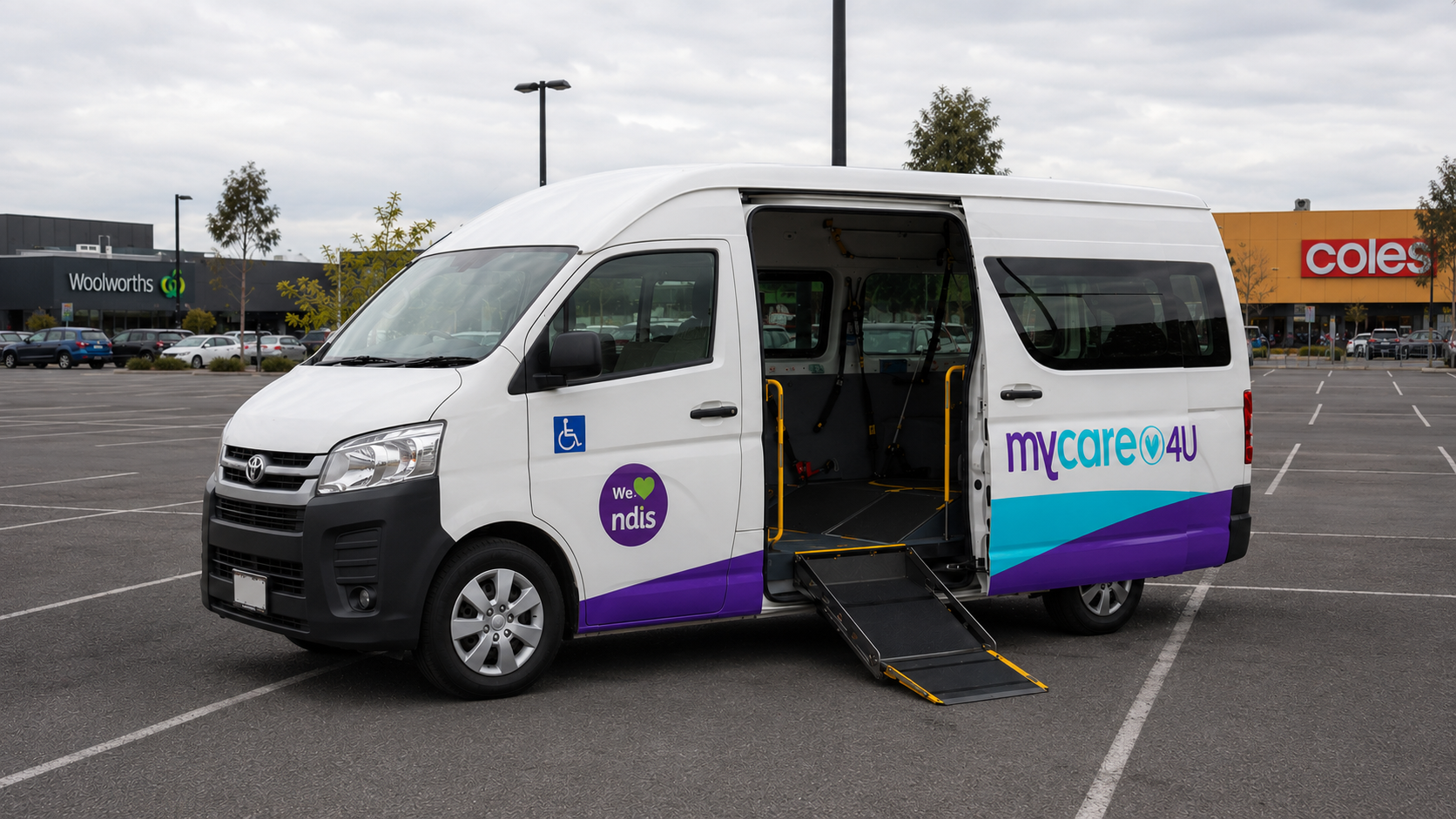
Port Melbourne pickups may require an apartment loading area, a safe position away from freight traffic, time for mobility equipment and a destination drop-off that avoids an unsafe crossing. The branded Corolla may suit some ordinary journeys, while the wheelchair-accessible Hiace may suit an eligible ramp-access trip when available. The correct vehicle, mobility equipment, safe loading and approved support are confirmed before travel.

MyCare4U wheelchair-accessible Hiace with ramp for disability transport support

Wheelchair-accessible vehicle option

The MyCare4U Hiace has a ramp and accessible layout for suitable wheelchair journeys when it is available. Mobility needs, safe loading, destination access, approved supports and the service agreement are confirmed before travel.

  • Exact entrance and safe pickup details
  • Route 109 stop and live-service checks
  • Freight, construction and crossing conditions
  • Waterfront weather, distance and rest points

Disability supports in Port Melbourne

Practical support for everyday life

Services are planned around the participant’s NDIS goals, preferred routine, communication, home environment and approved supports. These Port Melbourne examples show how support may connect with real local life; suitability, funding, timing and worker availability still need to be confirmed.

Explore all supports

Daily Personal Care & Self-Care

Respectful assistance with showering, dressing, meals and other agreed personal routines in a Port Melbourne apartment or supported living arrangement. Arrival, privacy, communication, mobility and the time needed to complete routines safely are discussed first; support outside ordinary hours depends on the service agreement and worker availability.

Relevant NDIS support items and rates vary by the time, day and participant plan. Personal and home care →

Supported Independent Living

Individualised help to build or maintain routines for shared or individual living, including meal planning, home safety, choice, communication and participation in everyday Port Melbourne life. Supported Independent Living requires separate assessment of needs, suitability and any current vacancy or accommodation arrangements.

SIL availability is subject to assessment, suitability and current vacancies. Supported home living →

Household Tasks

Practical assistance with cleaning, laundry, meal preparation, shopping lists and home organisation. A shift can reflect building waste systems, delivery or loading rules, compact storage and shared-facility arrangements, the participant’s energy and preferred way of completing tasks instead of imposing a standard household routine.

Delivered according to your goals and approved supports. Explore home support →

Daily Living & Life Skills

Step-by-step coaching with budgeting, shopping, cooking, digital bookings, communication, time planning and practising a familiar journey such as the route between home, a Route 109 stop and a participant-chosen community destination. Written, visual, demonstrated or repeated instruction can be used at the participant’s chosen pace.

Support is adapted to your pace and preferred way of learning. Skills and independence →

Community Participation

Support to take part in chosen social, recreational and community activities in Port Melbourne and surrounding areas.

You decide what meaningful participation looks like for you. Community participation →

Multicultural & Language Matching

Worker matching that considers language, culture, faith, food, family routines and preferred communication. MyCare4U asks the participant what matters and aims for a suitable match where available, without making assumptions from a surname, suburb, community or diagnosis.

We aim to provide a suitable worker match wherever available. Multicultural support workers →

Disability-aware community access planning

Useful Port Melbourne places and access resources

These independent parks, public facilities and transport resources may help with a participant-chosen Port Melbourne community-access plan. They are included solely as practical planning references and each remains independently operated. Port Melbourne crosses two council areas, so the organisation responsible for a place may be the City of Melbourne, City of Port Phillip, Parks Victoria or another public body. Programs, opening hours, access features, construction and transport conditions can change; check the linked official source and the exact feature required before visiting.

Nature and sensory participation

Westgate Park and Birding by Ear

Westgate Park sits beneath the West Gate Bridge in Port Melbourne and includes lakes, shared-use trails, picnic space and bird habitat. Parks Victoria’s Birding by Ear activity was developed so people with vision impairment can participate in a ranger and volunteer-led walk, and its official information explains when a participant may need to organise a support person. A MyCare4U worker may support a chosen park routine, sensory exploration, photography or scheduled activity by checking the meeting point, weather, distance, mobility needs, equipment and return plan. Confirm the current activity schedule and exact route before attending.

Official Parks Victoria Birding by Ear information
Library and digital access

Port Melbourne Library

Port Melbourne Library at 333 Bay Street is operated by the Port Phillip Library Service in the City of Port Phillip part of the suburb. Its official listing identifies wheelchair access, a free Wi-Fi hotspot and limited parking. A worker may help plan a library visit, use digital resources, choose a program, prepare a visual sequence or build a repeatable route from home. Wheelchair accessible does not describe every person’s needs, so confirm opening hours, program bookings, parking, toilets and the exact access feature required.

Official Port Melbourne Library listing
Community venue

Fishermans Bend Community Centre

The City of Port Phillip lists Fishermans Bend Community Centre at the corner of Dunstan Parade and Centre Avenue as an accessible venue with a kitchenette and public-transport access. It hosts community groups and hireable spaces, but this does not mean every program is open, funded or suitable for every participant. A support worker may help confirm a chosen activity, prepare for the venue, support communication and pace participation. Check the official listing for current use, booking, parking and access details.

Official community centre listing
Accessible journey tools

Transport Victoria accessibility resources

Transport Victoria explains that Journey Planner can show features such as accessible toilets, hearing loops, lifts, tactile indicators, ramp-access tram stops and accessible buses. For a Port Melbourne journey, a support worker may help compare live options, check the Route 109 boarding point, nominate a clear meeting place, allow enough transfer time and prepare a backup route. A low-floor vehicle does not by itself guarantee level or ramp access at the intended stop, so check the exact service and stop before travel.

Transport Victoria accessibility resources

Culture and communication matter

Support should feel respectful from the first conversation.
LanguageFaithCultureFoodFamily routinesCommunication

Culturally responsive disability support

Respectful support for Port Melbourne routines and communication

A person’s address does not tell us their language, faith, culture, family involvement, food preferences or communication method. MyCare4U asks the participant directly about what should shape support in Port Melbourne, including how information is explained, who may be involved in decisions and which personal or household routines must be respected.

Communication preferences may include plain language, visual steps, demonstrations, written reminders, extra processing time, communication devices or a consistent way to prepare for changes. Where possible, MyCare4U aims to match a worker who can respect the requested language, culture and communication approach, subject to worker skills, availability and the requirements of the support.

Matching is reviewed through the participant’s experience. Feedback about timing, pace, boundaries, communication and what makes a local journey feel manageable should inform future shifts rather than being treated as an afterthought.

Explore Culturally Matched Support

Starting support in Port Melbourne

Plan the support outcome and the local details together

Participants and families can explain the support being requested, exact address, preferred days and times, mobility and communication requirements, worker preferences and any home-entry or travel information needed for a safe introduction. Because Port Melbourne crosses municipal boundaries and includes residential, waterfront and industrial areas, the first conversation should identify the actual building entrance, pickup conditions and destination rather than relying only on the suburb name. MyCare4U then discusses service fit, current availability, the proposed worker match, pricing and the service agreement before support begins.

Support coordinators can use the referral form to share relevant goals, support type, frequency, plan-management details, authorised contacts, communication needs and risks that affect safe delivery. Local context—such as apartment access, Route 109 boarding, waterfront conditions, freight traffic or a Fishermans Bend pickup—can be included when it changes how a shift should be scheduled or delivered. Please provide only the personal or health information necessary for the referral.

NDIS funding is individual. A visit to Westgate Park, a library or community centre, travel on a named tram route or help with an ordinary home routine is not automatically funded merely because it appears on this page. The participant or authorised representative should consider plan goals, available funding and applicable NDIS guidance; admission, food, fares and personal purchases remain separate participant expenses unless another valid arrangement applies.

MyCare4U supports enquiries across Port Melbourne Port Melbourne VIC 3207 Call 1800 00 10 20 Service fit, timing and worker availability are confirmed before support begins

Nearby service areas

Explore NDIS support near Port Melbourne

Port Melbourne connects with Docklands, Southbank and central Melbourne, while its established bayside neighbourhood continues through the City of Port Phillip. Choose the page that reflects the participant’s actual home, destination or routine, and use the exact address when council boundaries affect local information.

Frequently asked questions

NDIS support in Port Melbourne

Which part of Port Melbourne does this service page cover?

MyCare4U can discuss enquiries using the participant’s exact Port Melbourne address, subject to service fit and availability. The suburb spans the City of Melbourne and City of Port Phillip. This City of Melbourne pack particularly explains the Fishermans Bend Employment Precinct and Lorimer Street context, while some listed public facilities sit in the Port Phillip part of the same suburb. Council boundaries do not decide a person’s NDIS eligibility, but they matter when checking local venues, programs, permits and public information.

How is disability support planned for a Port Melbourne home or apartment?

Planning can include the correct entrance, intercom or concierge procedure, lifts, visitor parking, a safe loading point, stairs where relevant, emergency information connected to the agreed shift and the participant’s chosen home routine. Personal care, meals, household assistance and daily-living coaching are discussed with respect for privacy, communication and preferred assistance. MyCare4U confirms the agreed schedule and support arrangements before service begins.

Can support include Westgate Park or a Birding by Ear activity?

A participant-chosen nature activity may be discussed when it connects with the participant’s goals, plan, funding and service agreement. A worker may help check the meeting point, weather, route, distance, mobility needs, sensory preferences, equipment and return journey. Parks Victoria operates the park and activity independently, sets its own schedule and explains when a support person may be needed. Use Parks Victoria’s official event and access information when planning the visit.

Can community access include Port Melbourne Library or Fishermans Bend Community Centre?

Community participation may include a participant-chosen library program, digital activity, community group or venue visit when it is relevant to the participant’s goals and agreed support. A worker may assist with planning, wayfinding, communication, technology and pacing. The library and centre are operated independently by the City of Port Phillip, and published accessibility does not guarantee that every feature suits every person. Confirm current programs, opening hours, bookings, parking, toilets and the exact access requirement first.

Can a worker support travel on Route 109 between Port Melbourne and the CBD?

An agreed community-access shift may include help preparing for the trip, locating the correct stop, checking live information, following a written or visual sequence, allowing extra boarding time and supporting communication. A low-floor tram does not guarantee level or ramp access at every stop, so Transport Victoria’s Journey Planner and current disruption information should be checked. MyCare4U does not operate public transport; fares, tickets and personal expenses are separate from the cost of support unless another valid arrangement applies.

How can support be planned around Fishermans Bend freight and construction traffic?

A practical plan can nominate a precise building entrance or pickup point, avoid unsafe loading areas, allow extra time, check road and public-transport changes and identify a backup route. Industrial noise, large vehicles, construction barriers, long crossings and limited kerb space may affect mobility, sensory comfort and timing. Conditions can change, so a previous route should not be treated as permanently suitable. The participant’s mobility, communication, fatigue and preferred level of assistance guide the final approach.

What disability supports can MyCare4U discuss in Port Melbourne?

Enquiries may cover personal and home care, household tasks, daily-living and life-skills coaching, community participation, transport assistance, Supported Independent Living and culturally responsive worker matching. The appropriate mix depends on the participant’s goals, plan, home environment, preferred schedule, risks and current availability. Local examples explain how support can be planned around real routines; they do not mean every support, destination, activity or time is automatically funded or available.

Can 24/7 disability support be arranged in Port Melbourne?

Some personal care and other agreed supports may be scheduled at any hour, including weekends, when this is consistent with the participant’s needs, plan, funding, service agreement, safe-delivery requirements and worker availability. The exact roster is confirmed before services begin. MyCare4U is not an emergency service, and the term 24/7 does not promise an immediate unscheduled response or guarantee that every requested shift can be filled.

Can I request language, cultural or communication matching in Port Melbourne?

Yes. Tell MyCare4U about language, culture, faith, food, family routines, communication devices, visual or plain-language information, processing time and other preferences relevant to respectful support. The team aims to find a suitable worker match where possible, subject to worker skills, service requirements and availability. The participant can give feedback about timing, boundaries, communication and comfort and ask for the match or approach to be reviewed.

How do I start or make a referral for disability support in Port Melbourne?

Use the booking form for an initial conversation or the referral form to share a defined support request. Include the exact address, service type, preferred schedule, goals, mobility and communication needs, worker preferences and necessary plan-management information. If travel is involved, include the pickup, destination and any building, waterfront or industrial-access detail that changes safe delivery. MyCare4U will discuss fit, current availability, pricing, the service agreement and next steps before support starts; provide only the personal information needed.

Your care, your way

Let’s plan disability support around your Port Melbourne life

Tell MyCare4U about the home routine, journey, appointment, community goal or worker preferences that matter to you. We will discuss what may fit, confirm current availability and explain the proposed next steps clearly.

Useful links:

Features and tools:

Useful forms:

Get in touch: